
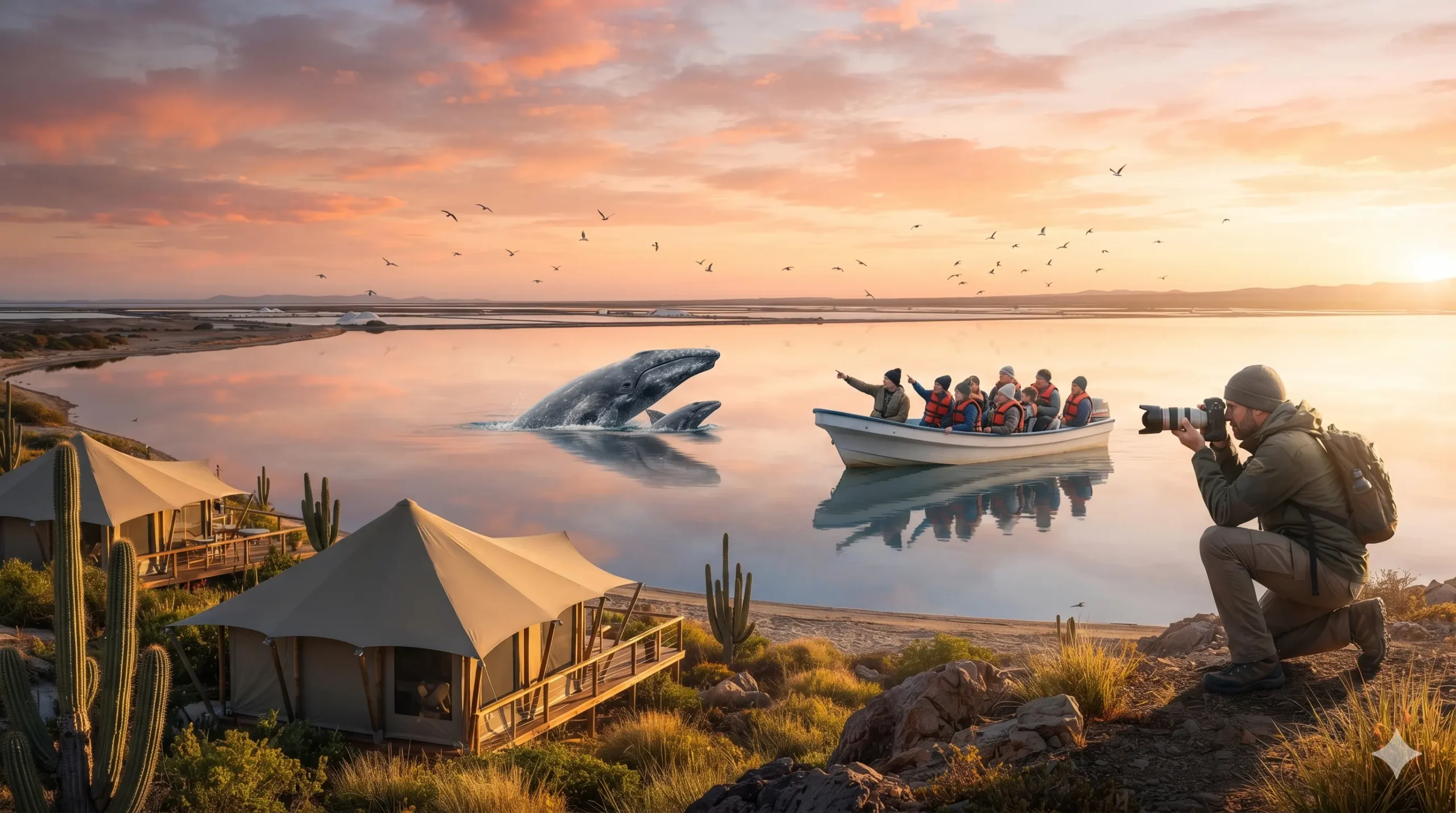
Imagine stepping into a small boat just after sunrise. The water is perfectly still. A curious mother gray whale slowly approaches, followed by her playful calf. Instead of watching from a distance, you’re witnessing one of the world’s most extraordinary wildlife encounters from just a few feet away.
This is why whale watching in Baja Lagoons has become one of the most sought-after eco-travel experiences for photographers, families, wildlife enthusiasts, and adventure travelers from around the globe.
Why Baja Lagoons Are the World’s Best Place for Gray Whale Watching
Not every whale watching destination offers intimate encounters. What makes Grey whale watching Baja truly unique is the geography.
The protected lagoons, especially Laguna Ojo de Liebre, provide calm, shallow waters where gray whales feel safe enough to raise their newborn calves. Unlike deep-ocean whale watching tours, these lagoons create rare opportunities for respectful, close encounters.
Many visitors are surprised by how curious the whales are. Mothers often guide their calves toward boats, creating unforgettable moments while remaining completely in control of the interaction.
This natural behavior is one reason marine biologists consider Baja California one of the finest whale watching destinations in the world.
More Than a Tour. An Immersive Wildlife Experience.
Many travelers make the mistake of booking a standard day tour.
While these excursions provide whale sightings, they often miss the magic that happens before sunrise, after sunset, and throughout the day.
Staying at a luxury lagoon-side camp allows guests to experience the destination instead of simply visiting it.
Imagine waking up beside the lagoon, enjoying breakfast while watching birds soar overhead, joining multiple guided whale excursions, returning for chef-prepared meals, and ending the evening beneath a sky filled with stars.
Instead of rushing back to the city, you become part of Baja’s incredible natural rhythm.
Ethical Whale Watching Protects Future Generations
Responsible tourism is becoming one of the biggest travel trends worldwide.
Today’s travelers want experiences that support conservation rather than disturb wildlife.
Professional guides follow strict regulations designed to minimize stress on whales while allowing visitors to observe natural behaviors safely.
Small-group excursions, respectful boat distances when required, and experienced local captains help protect one of Mexico’s most valuable marine ecosystems.
By choosing ethical operators, travelers contribute to local communities while supporting long-term conservation efforts.
Why Photographers Love Gray Whale Watching in Baja
Wildlife photographers often spend years chasing the perfect whale image.
In Baja, incredible photographs happen naturally.
Soft morning light reflects across calm lagoons.
Breaching whales create dramatic silhouettes.
Newborn calves swim beside their mothers.
Birdlife adds another layer of biodiversity to every outing.
Whether you’re using a smartphone or professional camera equipment, every excursion offers new storytelling opportunities.
Can You Combine Whale Watching in Loreto?
Many travelers planning a Baja adventure ask whether they should include Whale Watching in Loreto.
The answer is yes.
While Baja Lagoons are famous for close gray whale encounters during migration season, Loreto offers opportunities to see blue whales, dolphins, humpback whales, and diverse marine life depending on the season.
Combining both destinations creates a complete Baja wildlife itinerary, giving travelers the chance to experience different ecosystems and whale species in a single journey.
A Journey That Changes How You See Nature
Long after the photographs are shared and the luggage is unpacked, travelers often remember one simple moment.
A baby gray whale surfacing beside the boat.
The silence across the lagoon.
The realization that wildlife experiences like this still exist.
These aren’t simply vacations.
They’re lifelong memories that inspire a deeper appreciation for our oceans and the remarkable creatures that call them home.
If you’ve been searching for an unforgettable adventure, now is the perfect time to experience Gray whale watching Baja and discover why Baja California continues to be recognized as one of the world’s greatest wildlife destinations.
Frequently Asked Questions
1. When is the best time for whale watching in Baja Lagoons?
The best season typically runs from January through March when gray whales arrive in Baja California to give birth and care for their calves.
2. Why are Baja Lagoons famous for gray whale watching?
The protected lagoons provide warm, calm waters that serve as important nurseries, allowing visitors to enjoy close yet respectful whale encounters.
3. Is whale watching in Baja safe for families?
Yes. Guided whale watching tours are suitable for families, couples, photographers, and first-time visitors when operated by experienced professionals.
4. Should I visit both Baja Lagoons and Loreto?
Absolutely. Baja Lagoons are renowned for gray whales, while Whale Watching in Loreto offers opportunities to see blue whales, dolphins, humpbacks, and other marine wildlife depending on the season.
5. What should I bring on a whale watching trip?
Pack layered clothing, sunscreen, sunglasses, a hat, comfortable shoes, binoculars, and a camera to make the most of your wildlife adventure.