
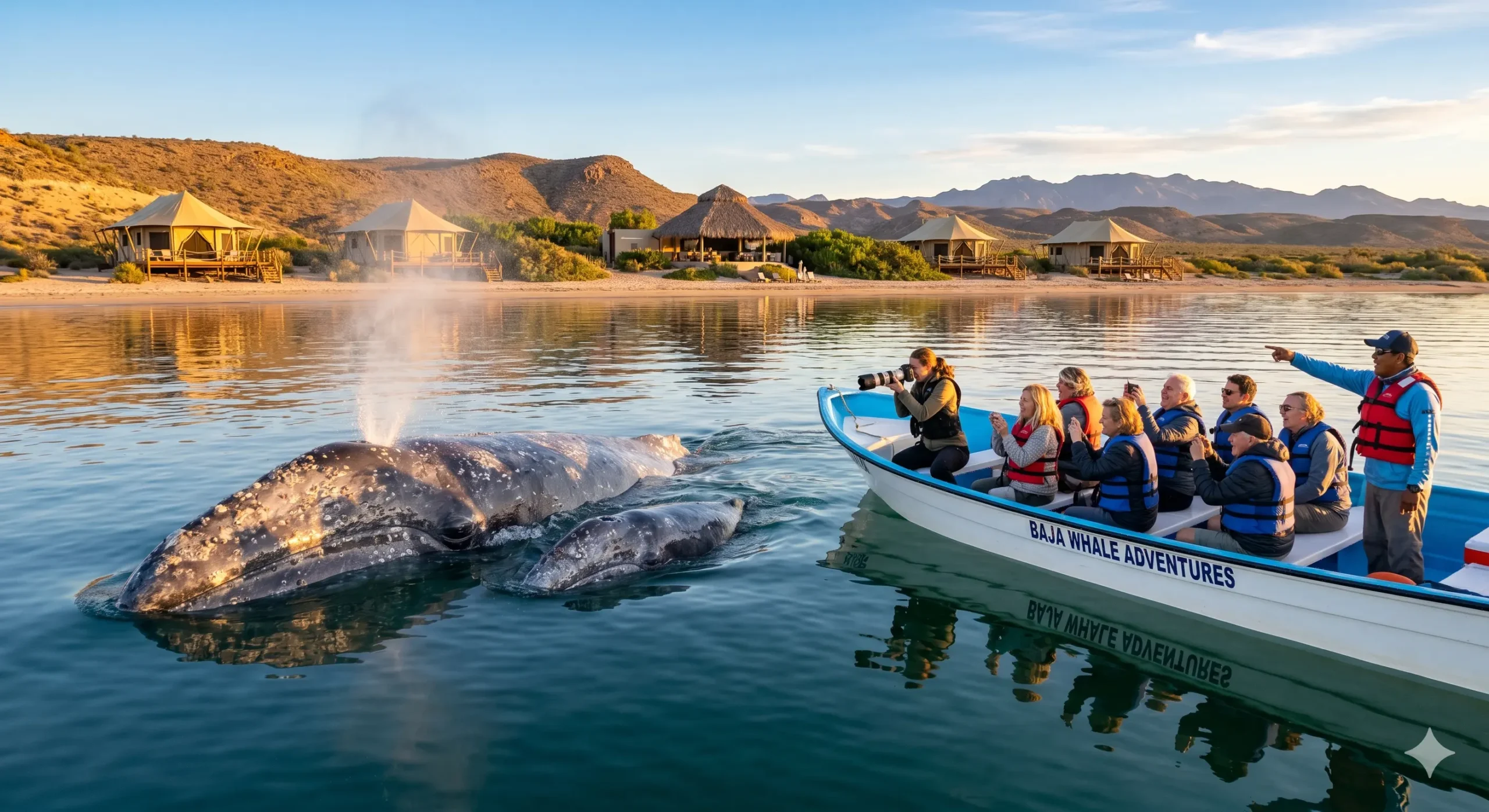
Every year, one of nature’s most remarkable migrations unfolds along the Pacific coast of Mexico. Thousands of gray whales travel from the icy waters of the Arctic to the warm, protected lagoons of Baja California, where they give birth and nurture their calves. Among these incredible destinations, Laguna Ojo de Liebre stands out as one of the world’s most important gray whale nurseries, offering visitors an extraordinary opportunity to witness these gentle giants up close.
For travelers seeking unforgettable wildlife experiences, Whale Watching in Baja delivers a rare combination of adventure, education, and meaningful connections with nature. At Gray Whale Camp, guests experience this incredible migration from an exclusive lagoon-side location designed to bring them closer to the whales and the wilderness that surrounds them.
Why Baja California Is One of the Best Whale Watching Destinations
Baja California is internationally recognized as one of the premier locations for Whale Watching in Mexico. The region’s protected lagoons provide ideal conditions for gray whales during their annual migration and calving season.
Unlike many whale watching destinations where sightings can be unpredictable, Baja’s lagoons offer consistently high encounter rates. Visitors often observe mothers and calves resting, socializing, and interacting in calm waters, creating unforgettable wildlife experiences.
The unique ecosystem, combined with strict conservation measures, helps ensure that both whales and visitors can safely share this extraordinary environment.
Close Encounters with Gray Whales
One of the most remarkable aspects of Baja Whale Watching is the opportunity for close, respectful interactions with gray whales.
These curious marine mammals are known for approaching boats, sometimes coming close enough for visitors to observe their behaviors in incredible detail. Witnessing a whale surface nearby or watching a calf swim beside its mother creates memories that last a lifetime.
At Gray Whale Camp, expert guides help guests understand whale behavior while ensuring every encounter follows ethical wildlife viewing practices that prioritize the well-being of the animals.
Ethical Tourism and Conservation Matter
Responsible tourism plays a critical role in protecting gray whale populations and their habitat.
Gray Whale Camp is committed to sustainable travel practices that promote environmental awareness and conservation education. Guests learn about whale migration patterns, marine ecosystems, and the importance of preserving Baja California’s unique natural resources.
By supporting ethical whale watching operations, travelers contribute to ongoing conservation efforts while gaining a deeper appreciation for marine wildlife.
The Advantage of Staying at a Lagoon-Side Camp
More Time with the Whales
Unlike standard day tours that require long travel times, staying directly beside Laguna Ojo de Liebre allows guests to maximize their whale watching opportunities.
With multiple guided excursions available throughout the day, visitors can spend more time observing whales and less time commuting.
Comfortable Safari-Style Accommodations
Adventure does not mean sacrificing comfort. Gray Whale Camp combines wilderness immersion with premium safari-style accommodations featuring comfortable beds, hot showers, and full-service dining.
Guests enjoy the perfect balance between authentic outdoor experiences and modern amenities.
Photography and Wildlife Opportunities
For photographers and nature enthusiasts, the camp provides exceptional opportunities to capture stunning images of gray whales, coastal landscapes, and Baja California’s diverse wildlife.
Golden sunrise excursions and dramatic sunset views create ideal conditions for memorable photography sessions.
An Immersive Nature Experience
A visit to Gray Whale Camp is about more than whale watching. It is an opportunity to disconnect from everyday routines and reconnect with nature.
From listening to whales in the distance to exploring one of Mexico’s most important wildlife habitats, every moment offers a deeper understanding of the natural world and the incredible migration that brings gray whales to Baja each year.
Conclusion
For travelers searching for the ultimate Whale Watching in Baja experience, few destinations compare to Laguna Ojo de Liebre. Combining close gray whale encounters, ethical eco-tourism, expert-guided excursions, and premium accommodations, Gray Whale Camp offers an unforgettable adventure that inspires both wonder and conservation awareness.
If witnessing one of nature’s greatest migrations is on your bucket list, now is the perfect time to plan your Baja whale watching journey and experience the magic of gray whales firsthand.
1. When is the best time for whale watching in Baja California?
The prime whale watching season typically runs from January through March, when gray whales arrive in Baja’s lagoons to calve and socialize.
2. Why is Laguna Ojo de Liebre famous for whale watching?
Laguna Ojo de Liebre is one of the world’s most important gray whale breeding and nursery areas, offering exceptional viewing opportunities.
3. How close can you get to gray whales during tours?
Gray whales are often curious and may approach boats naturally, allowing for memorable close encounters while following wildlife protection guidelines.
4. What should I bring on a Baja whale watching trip?
Bring layered clothing, sunscreen, sunglasses, a camera, binoculars, and comfortable outdoor gear for changing weather conditions.
5. Why stay at Gray Whale Camp instead of taking a day tour?
Staying at the camp provides more whale watching opportunities, direct lagoon access, expert-guided excursions, premium accommodations, and a fully immersive wildlife experience.