
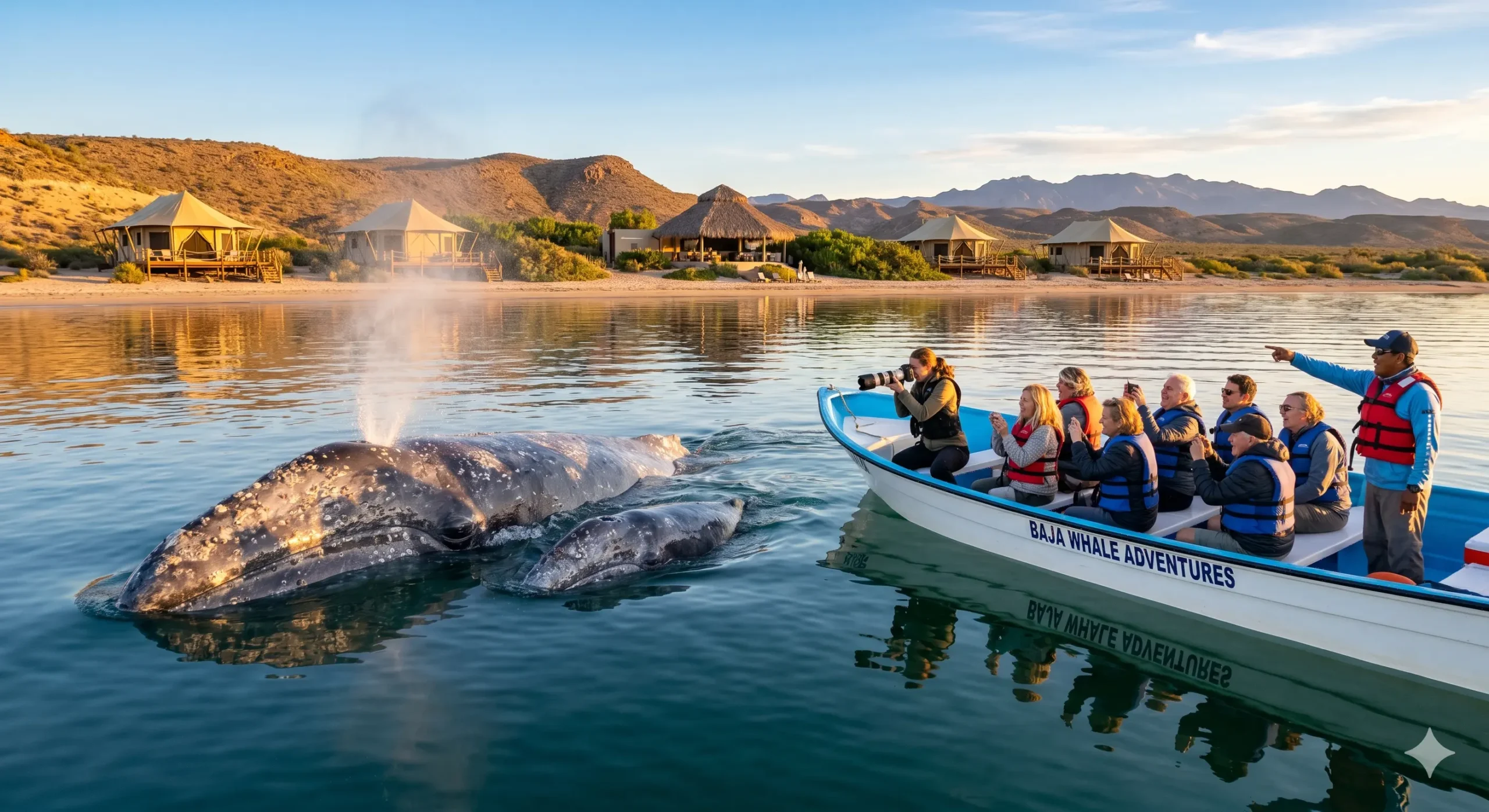
Every winter, something extraordinary happens along the Pacific coast of Baja California, Mexico. Thousands of gray whales complete one of the longest migrations on Earth, traveling nearly 10,000 miles from the icy waters of Alaska to the warm lagoons of Baja. Their destination is Laguna Ojo de Liebre, one of the world’s most important gray whale nurseries and one of the few places where humans can experience remarkably close encounters with these gentle giants.
As travelers increasingly seek meaningful, sustainable experiences instead of crowded tourist attractions, Whale Watching in Baja has become one of the fastest-growing wildlife adventures. It offers something few destinations can match: the chance to witness one of nature’s greatest migrations while supporting responsible eco-tourism.
Why Baja California Is One of the World’s Best Whale Watching Destinations
Not every whale watching destination offers the same experience. In many locations, whales are observed from a distance as they migrate offshore. Baja California is different.
The calm, protected lagoons provide a safe environment where gray whales give birth and care for their calves. These curious mammals often approach small boats voluntarily, creating unforgettable moments for visitors and photographers alike.
Unlike fast-paced sightseeing tours, Baja Whale Watching is about slowing down, observing wildlife respectfully, and appreciating an ecosystem that has remained largely unchanged for centuries.
For travelers searching for Whale Watching in Mexico, Baja California consistently ranks among the world’s premier wildlife destinations.
A Story You’ll Remember Long After the Trip Ends
Imagine stepping outside your safari-style tent just after sunrise. The lagoon is calm, birds glide across the water, and somewhere in the distance you hear the unmistakable exhale of a gray whale.
A short boat ride later, a mother whale and her calf approach quietly. The calf circles the boat while its mother watches nearby. There are no loud engines, no crowds, and no rush. The encounter happens naturally, creating a memory that photographs alone cannot capture.
These authentic wildlife experiences are why many guests describe their visit as life-changing rather than simply another vacation.
More Than a Day Tour: Why Stay at a Lagoon-Side Camp?
Many visitors choose standard day trips that require long drives and limited time on the water. Staying at a premium lagoon-side camp offers a completely different experience.
Guests enjoy multiple whale watching excursions throughout their stay, increasing opportunities for sightings under different weather and light conditions. Comfortable safari-style accommodations provide cozy beds, hot showers, delicious meals, and spectacular views just steps from the lagoon.
Instead of spending hours commuting, guests spend more time immersed in nature. Early mornings, golden sunsets, and peaceful evenings become part of the adventure, making the entire journey far more rewarding than a single excursion.
Ethical Whale Watching Protects the Future
Responsible wildlife tourism plays an important role in marine conservation.
Ethical operators follow strict guidelines that minimize disturbance to whales while allowing visitors to appreciate these incredible animals safely. Small group excursions, experienced local guides, and conservation-focused practices help protect the lagoon’s fragile ecosystem for future generations.
Choosing responsible Mexico Whale Watching experiences supports local communities while encouraging continued protection of one of the world’s most remarkable marine habitats.
A Paradise for Wildlife Photography
Whether you’re using a professional camera or a smartphone, Baja California offers endless photographic opportunities.
Golden morning light, playful whale calves, dramatic ocean landscapes, coastal birds, and breathtaking sunsets combine to create stunning images throughout your stay. Unlike many wildlife destinations where sightings are brief, extended time on the lagoon allows photographers to capture unique moments patiently and respectfully.
Why This Adventure Belongs on Your Bucket List
Travel trends are shifting toward experiences that create lasting memories instead of simply checking destinations off a list.
Whale Watching in Baja offers adventure, education, conservation, luxury, and genuine emotional connection in one unforgettable journey. From close encounters with curious gray whales to peaceful evenings beside the lagoon, every moment reminds visitors how extraordinary the natural world can be.
If you’ve been dreaming about witnessing one of Earth’s greatest wildlife migrations, there has never been a better time to plan your Whale Watching in Mexico adventure. Staying at Gray Whale Camp transforms a simple whale watching trip into an immersive experience you’ll remember for the rest of your life.
1. When is the best time for whale watching in Baja California?
The best time for Whale Watching in Baja California is from January through March, when thousands of gray whales arrive in the warm lagoons to give birth and nurse their calves. February is often considered the peak season for close whale encounters.
2. Why is Baja California famous for gray whale watching?
Baja California is home to Laguna Ojo de Liebre, one of the world’s most important gray whale breeding and calving lagoons. The calm, protected waters allow visitors to experience incredibly close encounters with gray whales, making it one of the best destinations for Baja Whale Watching.
3. What makes Gray Whale Camp different from a regular whale watching tour?
Unlike standard day tours, Gray Whale Camp offers a luxury lagoon-side experience with safari-style accommodations, multiple guided whale watching excursions, expert naturalists, delicious meals, and more time on the water. Staying beside the lagoon provides a more immersive and memorable wildlife adventure.
4. Are whale watching tours in Mexico safe for families and seniors?
Yes. Guided Whale Watching in Mexico tours are suitable for families, couples, photographers, and seniors. Experienced boat captains follow strict safety guidelines, and the calm waters of Baja’s protected lagoons make the experience comfortable for most visitors.
5. How close can you get to gray whales during a whale watching tour?
Gray whales in Baja California are known for their curiosity. While every encounter is natural and depends on the whales, they often approach boats on their own, allowing visitors to enjoy remarkably close views while respecting ethical wildlife viewing practices.
6. What should I pack for a Baja whale watching trip?
Pack layered clothing, a windproof jacket, sunglasses, sunscreen, a hat, comfortable walking shoes, binoculars, a camera with extra batteries, and a waterproof bag to protect your gear during boat excursions.
7. Is whale watching in Baja California environmentally responsible?
Yes, when you choose a responsible operator. Ethical whale watching companies follow conservation guidelines that protect marine wildlife, minimize disturbance to whales, and support local communities through sustainable eco-tourism.
8. Can I take professional wildlife photographs during the trip?
Absolutely. Baja California is one of the world’s best destinations for wildlife photography. Early morning light, playful gray whales, stunning lagoon landscapes, and diverse birdlife create excellent opportunities for photographers of all skill levels.
9. How many whale watching excursions are included during a stay?
Guests staying at Gray Whale Camp typically enjoy multiple guided whale watching excursions, giving them more opportunities to observe whale behavior, photograph different conditions, and experience the lagoon at various times of day.
10. Why should I choose Whale Watching in Baja instead of other destinations?
Whale Watching in Baja offers one of the most intimate gray whale experiences in the world. Visitors can stay beside the lagoon, enjoy close encounters with curious whales, learn from expert guides, and experience ethical eco-tourism in a breathtaking natural setting that few destinations can match.