
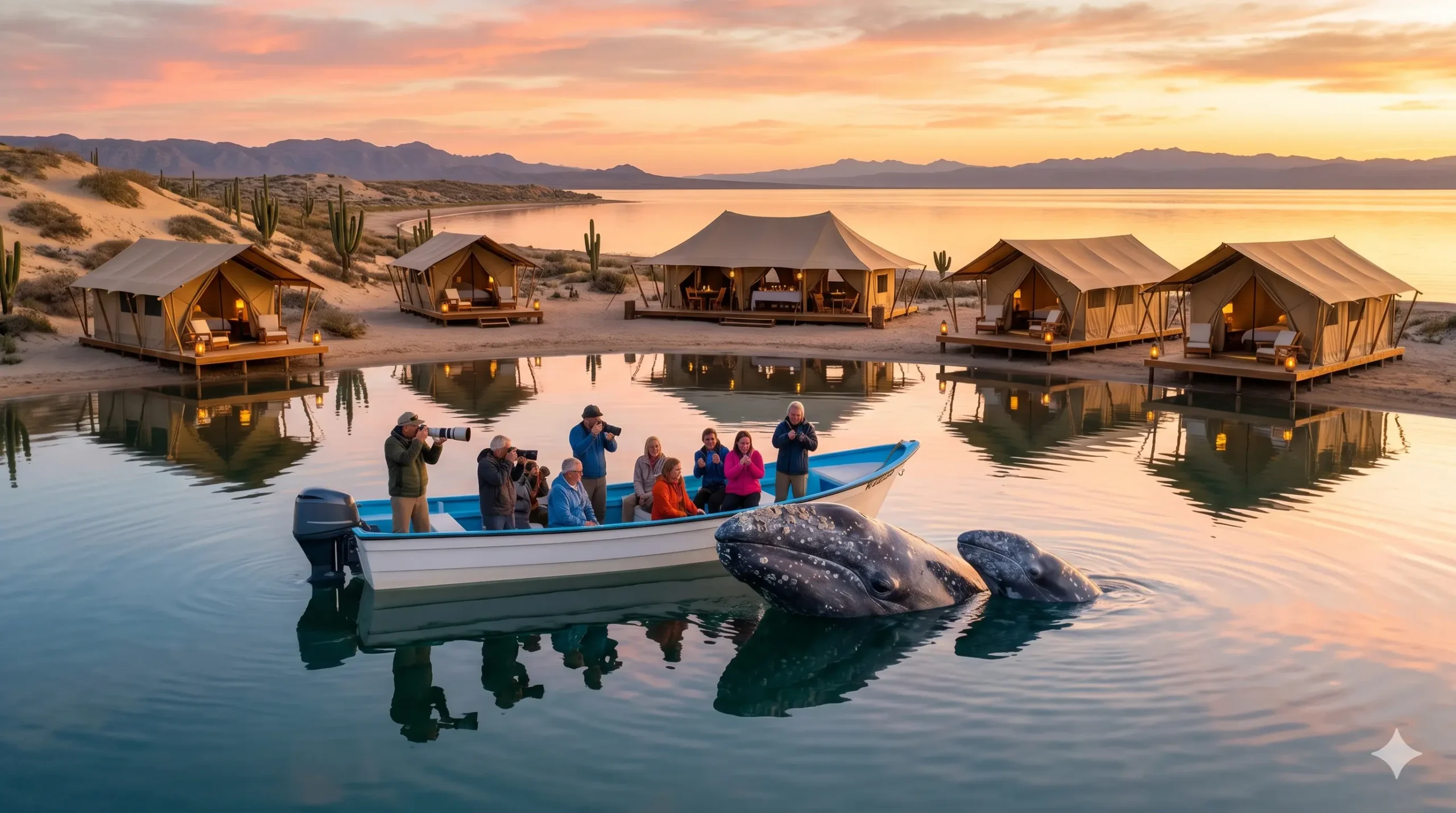
Most pages about a Baja whale watching camp tell you it will be the best trip of your life before telling you anything you can actually picture. Fair enough, since it usually is. But if you are deciding whether to book a Mexico whale watching camp, what you probably want to know is simpler: what do you actually do all day, what does the camp feel like at night, and is this the kind of trip that fits how you travel. Here is what a real day looks like at our camp in the Baja lagoons, based on how the days actually run.
Where This Camp Actually Sits
Gray Whale Camp is based on Laguna Ojo de Liebre, also called Scammon’s Lagoon, inside the protected Vizcaíno Biosphere Reserve near Guerrero Negro. It sits close to the halfway point of the Baja California peninsula and is the closest whale watching camp in the region to the US border. The lagoon is split into three whale watching zones, and the camp operates in Zone 2, which permits only 6 boats at a time. That limit matters more than it sounds. Fewer boats means calmer water, less engine noise, and whales that stay relaxed instead of scattering.
A Day Inside Camp, Hour by Hour
Mornings start early but not rushed. Breakfast is cafe style, coffee, something hot, enough time to actually wake up before the first boat trip of the day. Guests walk down to a dock (not through mud, which is a detail that matters more once you are standing at the water’s edge in January) and head out with a local guide who has spent years reading how this specific lagoon behaves.
The first boat trip usually runs a couple of hours. This is the part every visitor pictures beforehand and the part that still surprises people once it happens, a mother gray whale bringing her calf close enough to a small boat that guests can reach out and touch it, calm and unhurried, in a place where a wild whale is choosing to approach rather than avoid.
Midday means lunch back at camp, also cafe style, with time to rest, walk the shoreline, or just sit with a coffee and watch the lagoon. Afternoons typically bring a second boat trip, weather permitting, often with different light and different whale behavior than the morning run.
Evenings are where the camp side of a Baja whale watching camp actually shows itself. Dinner is a multi course meal built around traditional Baja ingredients, served in a dining tent, followed by the kind of unhurried evening that does not really exist at a hotel resort. Some guests read. Some talk over the day’s photos. And for anyone who wants it, there are chess lessons by the fire, an unusual detail for a wildlife camp, but one that fits the pace of the place. Guests sleep in heated, real bedroom size tents just steps from the water, close enough to hear whales breathing in the lagoon at night, which is a strange and genuinely memorable way to fall asleep.
What It Actually Costs, and When to Book
Trip pricing generally runs from about $2,995 for a 4 day trip up to $5,195 for a 10 day combined gray and blue whale trip. Prices rise as each date fills, so early booking secures the lowest rate and better odds of an available en suite upgrade cabin, since those go first. Gray whale season runs from late December through late March, with peak calf activity in February. Late March trips see fewer total whales overall but a higher share of curious ones approaching the boats, which some returning guests actually prefer over the busier peak weeks.
Lagoon Camp or Loreto Combo Trip
A stay at a whale watching camp in the Baja lagoons is built around gray whales specifically, mothers and calves in sheltered, shallow water. Loreto and the Sea of Cortez, on the Gulf side of the peninsula, is a different experience entirely, with blue whales, fin whales, humpback whales, and occasional orcas feeding in open water, usually reached on day trips rather than a lagoon camp stay. For travelers who want more than one species on a single trip, a combo itinerary pairing a lagoon camp stay with a Loreto blue whale expedition covers both without needing to plan two separate trips.
Frequently Asked Questions
Do I need boating or swimming experience to visit a Baja whale watching camp? No. Guests stay in the boat the entire time, guided by an experienced local captain, and the lagoon itself is calm and sheltered. Access to the boats is by dock rather than wading through open water or mud.
How close do the whales actually get? Distance varies by encounter and is always led by the whale, not the boat, but close, arm’s reach encounters with curious mother and calf pairs are a regular part of the experience in this lagoon, not a rare exception.
Is a whale watching camp in the Baja lagoons a good trip for families or older travelers? The pace is unhurried by design, with two boat trips a day and rest time built in between, real beds rather than sleeping bags, hot showers, and flush toilets. It suits travelers who want an active but not physically demanding wildlife trip.
What is different about staying at a camp versus a day trip from a hotel? A day trip gets you a few hours on the water and then a drive back. A camp stay puts you inside the ecosystem itself, close enough to the lagoon to hear whales at night, with two boat outings a day instead of one rushed trip, and evenings built around the same small group rather than a bus back to a hotel.
Do I need a passport to visit a Mexico whale watching camp? Yes. US travelers need a valid passport book or passport card to enter Mexico by land or air, along with any additional documentation requested at the time of booking.
Ready to See It Yourself
The best way to know if a Baja whale watching camp fits how you travel is to see a full day laid out against the 2027 season dates.
View 2027 Schedule and Pricing . Book Your Adventure . See the Gallery