
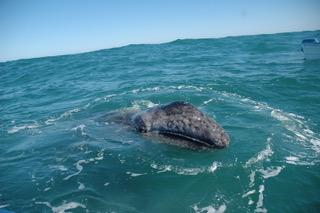
Planning a Whale Watching Trip to Baja is much easier when you know what to organize before you go. The key is to choose dates within the gray whale season, decide which destination or lagoon fits your travel plans, book early for popular weeks, and prepare for cold, windy mornings on the water.
If you’re traveling with Gray Whale Camp, you do not need to choose between multiple lagoons. Our trips are based at Laguna Ojo de Liebre, and you can select from the published trip dates listed on our Schedule page. The Schedule page also explains current trip lengths, inclusions, and available transportation options.
Step 1: Choose Your Dates
Across Baja, gray whales are generally present in the lagoons from around mid-January through mid-April, although conditions and whale activity naturally vary from year to year.
Mother-and-calf activity is often especially noticeable during late February and March, making these popular months for travelers planning a whale watching experience.
If you are traveling independently, choose your destination or lagoon first and then plan your travel dates around the local whale-watching season.
If you are traveling with Gray Whale Camp, simply choose from our published trip dates at Laguna Ojo de Liebre.
For Gray Whale Camp’s current departures, visit our Schedule page.
For a broader month-by-month overview, read our Baja gray whale watching calendar.
Step 2: Choose a Trip From the Published Schedule
Gray Whale Camp’s available trip structures, durations, and inclusions are listed on our Schedule page.
Our schedule generally includes two whale-watching boat trips of approximately 2 to 3 hours each per whale-watching day, weather permitting.
Because the whales are wild and lagoon conditions can change, the exact timing of boat trips may vary.
Wind is one of the most important factors affecting whale-watching conditions. Strong winds can delay, shorten, reschedule, or occasionally prevent a boat trip.
For that reason, trips that include more whale-watching days generally give you more opportunities to experience favorable conditions and potentially enjoy close encounters.
If you are comparing different whale-watching companies before booking, read our guide on how to choose whale watching tours for useful questions to ask before making a decision.
Step 3: Plan How You Will Get There
Travel in Baja can involve long distances, remote roads, and areas with limited services, so transportation planning is an important part of your Whale Watching Trip.
If you’re traveling with Gray Whale Camp, check our Schedule page for the transportation options currently available for your selected trip.
If you are arranging your own transportation, keep these general Baja travel points in mind:
- Roads in central Baja can be long and remote, so allow plenty of buffer time.
- Avoid planning extremely tight arrival or departure connections.
- Military checkpoints are common on Baja highways, so keep your identification and travel documents accessible.
- If you are driving your own vehicle into Mexico, review current Mexican auto insurance requirementsbefore departure.
- Fuel stations and services can be farther apart than many travelers expect.
- Download maps for offline use before entering remote areas.
- Keep emergency contact details and important booking information available offline.
A little extra travel time can make the journey much less stressful, especially if weather or road conditions create unexpected delays.
Step 4: Get Your Documents Ready
Before leaving home, organize all essential travel documents.
You may want to keep both physical and digital copies where practical.
Bring:
- A passport valid for your entire stay
- Any Mexican entry or immigration documents required at the time of travel
- Travel insurance information
- Insurance suitable for travel in remote regions
- Gray Whale Camp booking confirmations
- Transportation confirmations
- Emergency contact information
- Copies of important reservations saved offline
Because mobile coverage can be limited in parts of Baja, do not rely entirely on accessing important documents through email or cloud storage while traveling.
Saving screenshots or PDF copies to your phone can be useful.
Step 5: Pack for Lagoon Conditions
One of the most common surprises for first-time visitors is how cold it can feel during early-morning boat trips.
Even when daytime temperatures on land feel comfortable, conditions on the lagoon can be cool, windy, and splashy.
For your whale-watching days, consider packing:
- A windproof and water-resistant jacket
- Warm fleece or an insulated mid-layer
- Comfortable base layers
- A beanie or warm hat
- Light gloves
- A sun hat with a strap
- Polarized sunglasses
- Reef-safe sunscreen
- Lip balm with sun protection
- A dry bag for your camera, phone, and personal belongings
- Shoes that can get wet
- Extra socks
- A reusable water bottle
- Motion-sickness medication or another remedy if you are prone to seasickness
- Camera batteries or a portable power bank
- Some cash for remote areas where card payments may not always be available
Layering is usually the best strategy.
You can remove warmer layers as the day gets warmer, but it is much harder to enjoy a boat trip if you start the morning without enough protection from the wind.
Step 6: Set Realistic Expectations
A whale-watching trip is a wildlife experience, not a staged attraction.
Every day can be different.
Keeping realistic expectations will help you enjoy the experience more fully.
Remember:
- Whale encounters are wild and never guaranteed.
- The number and behavior of whales can vary from day to day.
- Wind and weather can change boat schedules.
- Boat trips may be delayed or adjusted for safety.
- Phone and internet coverage may be limited in remote areas.
- Travel times in Baja can be longer than expected.
- Always follow your captain’s and guide’s instructions.
- Never attempt to touch, feed, chase, or disturb wildlife unless specifically permitted under local regulations and directed by authorized guides.
The unpredictability is also part of what makes whale watching in Baja so memorable.
Each trip onto the lagoon is different.
A Practical Photography Tip
Keep your camera or phone secured with a wrist strap or neck strap and have it ready before the boat slows down near whale activity.
Close encounters can sometimes happen very quickly, and the first few seconds may provide some of the most memorable photographic opportunities.
At the same time, try not to experience the entire encounter through a screen.
Take a few photographs, then give yourself time to simply watch.
Before You Leave: Quick Whale Watching Trip Checklist
Before beginning your trip, confirm that you have:
- Selected the right dates for your Baja whale-watching plans
- Chosen your destination or lagoon if traveling independently
- Selected a published Gray Whale Camp trip date at Laguna Ojo de Liebreif traveling with us
- Confirmed your accommodation and transportation
- Reviewed the Gray Whale Camp Schedule page
- Checked passport and Mexico entry requirements
- Purchased appropriate travel insurance
- Saved important documents offline
- Packed warm and wind-resistant clothing
- Protected your phone and camera from water
- Allowed extra travel time
- Prepared for limited connectivity
- Reviewed current weather conditions before departure
Completing these basics ahead of time can make your Whale Watching Trip to Baja much smoother.
Ready to Lock In Your Dates?
If you are ready to experience gray whale watching at Laguna Ojo de Liebre, start by visiting our Schedule page.
There you can review our currently published trip dates, trip durations, inclusions, and transportation options.
Once you have found the trip that works best for you, contact Gray Whale Camp with any questions before booking.
Frequently Asked Questions
Peak whale-watching weeks can be popular, so booking early is a good idea, particularly if your travel dates are not flexible. For Gray Whale Camp availability, check our Schedule page for currently published dates.
Gray Whale Camp trips are based at Laguna Ojo de Liebre in Baja California Sur, Mexico. Guests traveling with Gray Whale Camp choose from our published trip dates rather than choosing between multiple lagoons.
No. Gray Whale Camp's whale-watching trips are based specifically at Laguna Ojo de Liebre. Travelers looking at Baja in general may compare different whale-watching destinations, but Gray Whale Camp guests should select from the available Laguna Ojo de Liebre trips shown on our Schedule page.
Transportation options can vary by trip. Please review the Schedule page for the transportation options currently offered with your selected departure.
Wear comfortable layers with a warm fleece or insulated layer and a windproof jacket. A beanie, light gloves, sunglasses, and shoes that can handle some water are also useful.
It can be. Early mornings on the lagoon may feel considerably colder than conditions on land because of wind, boat movement, and water spray. Layered clothing is recommended.
The broader gray whale season generally runs from approximately mid-January through mid-April. Late February and March are often popular because mothers and calves may be active in the lagoons. Gray Whale Camp guests should check our Schedule page for the actual trip dates we currently offer.
No. Gray whales are wild animals, so sightings, proximity, and behavior can never be guaranteed. Weather and lagoon conditions can also influence each day's experience.
Yes. Strong wind and other unsafe conditions can delay, modify, or cancel boat trips. Your captain will make safety decisions based on current conditions.
Coverage can be limited or unavailable in remote parts of Baja. Download maps, booking confirmations, and important travel information before your trip.
Drone use may be restricted in protected whale areas and other regulated locations. Do not assume that recreational drone use is permitted. Ask Gray Whale Camp before packing a drone and review current local regulations before travel.