Quick answer: All three lagoons offer reliable grey whale sightings between January and March, but they are not the same trip. Ojo de Liebre (Scammon’s Lagoon) is the closest to the US border and easiest to reach. San Ignacio Lagoon is the most remote and has the strongest reputation for calm-water, close mother-and-calf encounters. Magdalena Bay is the most accessible from Los Cabos and La Paz and works well as a shorter add-on trip. If close encounters and a dedicated wildlife camp matter more than convenience, Gray Whale Camp’s Ojo de Liebre expedition is built specifically around that experience.
Every year, thousands of grey whales complete one of the longest migrations of any mammal, traveling from the Bering Sea and Arctic coastline down to Baja California Sur to calve and nurse their young in sheltered, warm-water lagoons. Three lagoons handle most of that traffic: Laguna Ojo de Liebre (also called Scammon’s Lagoon), Laguna San Ignacio, and Bahía Magdalena (Magdalena Bay). They sit inside or near the Vizcaíno Biosphere Reserve, one of Mexico’s most protected coastal ecosystems, and each one gives a genuinely different kind of trip. This guide compares them side by side so you can pick the lagoon that actually matches what you want from the trip, not just the one that comes up first in a search.
Quick Comparison: Baja’s Three Whale Watching Lagoons
| Factor | Ojo de Liebre (Scammon’s Lagoon) | San Ignacio Lagoon | Magdalena Bay |
| Access | Closest to the US border, near Guerrero Negro | Most remote, desert camp setting near San Ignacio town | Closest to Los Cabos and La Paz airports |
| Typical trip style | Multi-day lodge or camp stay with boat excursions | Multi-day remote camp, minimal infrastructure | Day trips or short overnight stays |
| Boat traffic | Moderate, tightly permitted | Low, strictly quota-controlled | Higher, more tour operators |
| Close-encounter reputation | Strong, especially with curious calves | Considered the classic “friendly whale” lagoon | Good, but more boats in the water at once |
| Best suited for | Travelers who want a dedicated whale camp experience without the longest drive | Travelers prioritizing the quietest, most intimate encounters | Travelers short on time or combining the trip with Los Cabos or La Paz |
Ojo de Liebre (Scammon’s Lagoon): Easiest to Reach, Still Wild
Ojo de Liebre sits within the Vizcaíno Biosphere Reserve near the town of Guerrero Negro, roughly at the midpoint of the Baja peninsula. Of the three lagoons, it is the most practical to reach from the US border, which makes it the common choice for travelers who want a full wildlife camp experience without committing to the longest overland trip.
Camps here typically run on heated cabins or safari-style tents, with two boat excursions a day built into the stay. Guide teams with decades of experience on this specific lagoon, including operators who have worked here for 25 or more years, tend to know the whale-gathering patterns well enough to consistently put guests within touching distance of curious calves. Sightings during peak season (January through March) are close to guaranteed, often with 5 to 20 or more whales visible per outing.
San Ignacio Lagoon: The Classic Friendly Whale Experience
San Ignacio Lagoon is further south and considerably more remote, reached by unpaved roads through the Baja desert. It has no permanent town infrastructure at the lagoon itself, so camps here are seasonal and set up specifically for whale watching season.
This remoteness is the point. San Ignacio has the longest-standing reputation among researchers and guides for calm water and low boat density, conditions that are widely credited with encouraging the “friendly whale” behavior Baja is known for, where mother whales bring their calves directly alongside small boats. Strict, government-controlled permits limit how many boats can be on the water at once, which keeps the lagoon quieter than the other two but also means trips need to be booked well ahead of the season.
Magdalena Bay: The Convenient Option
Magdalena Bay is the most accessible of the three, within a few hours of Los Cabos and La Paz. It attracts more day-trip traffic and a wider range of tour operators as a result, from budget outings to more comfortable multi-day options.
For travelers who are already planning a Los Cabos or La Paz trip and want to add whale watching without restructuring the whole itinerary, Magdalena Bay is usually the easiest fit. Sightings are still very good in peak season, though the higher number of boats on the water means encounters tend to feel less exclusive than San Ignacio or Ojo de Liebre. To understand how these lagoons fit into a wider Baja itinerary, the Baja California travel guide covers logistics for the whole peninsula, not just the whale watching legs.
Which Lagoon Fits Your Trip?
- Want the closest option to the US border with a full camp experience: Ojo de Liebre
- Want the quietest water and the best odds of a calf approaching your boat: San Ignacio Lagoon
- Short on time or already near Los Cabos or La Paz: Magdalena Bay
- Traveling solo and don’t want to pay a single supplement: Confirm this with your operator directly, since policies vary by camp and season
- Want the trip built entirely around whale behavior and expert guiding rather than a general beach vacation: Ojo de Liebre or San Ignacio, ideally with a camp that runs whale-specific, small-group boats
Best Time to Visit Each Lagoon
| Month | Activity Level | Notes |
| December | Whales arriving | Lower numbers, fewer crowds |
| January | Building steadily | Good early-season option, especially at Ojo de Liebre |
| February | Peak | Highest concentration of whales and calves across all three lagoons |
| March | Peak | Calves more active and curious, still excellent odds |
| April | Whales departing | Numbers thin out as the migration heads north |
Grey whales are among the most approachable large whale species anywhere in the world, and understanding why calves and mothers behave this way in the lagoons adds real context to a trip. The whale species and wildlife page covers the migration route and behavior patterns in more depth if you want to go into a booking already understanding what you’re looking at.
FAQs
Which lagoon in Baja is best for whale watching?
There is no single best lagoon, it depends on priorities. Ojo de Liebre balances accessibility with a strong camp experience, San Ignacio Lagoon has the best reputation for close, calm-water encounters, and Magdalena Bay is the most convenient for travelers already near Los Cabos or La Paz.
Is San Ignacio Lagoon or Scammon’s Lagoon better?
San Ignacio tends to offer quieter water and fewer boats, which many guides consider the reason whales approach more readily there. Scammon’s Lagoon (Ojo de Liebre) is easier and faster to reach and still delivers strong sightings, so the “better” choice depends on how much remoteness you’re willing to trade for convenience.
Can you touch or swim with grey whales in Baja?
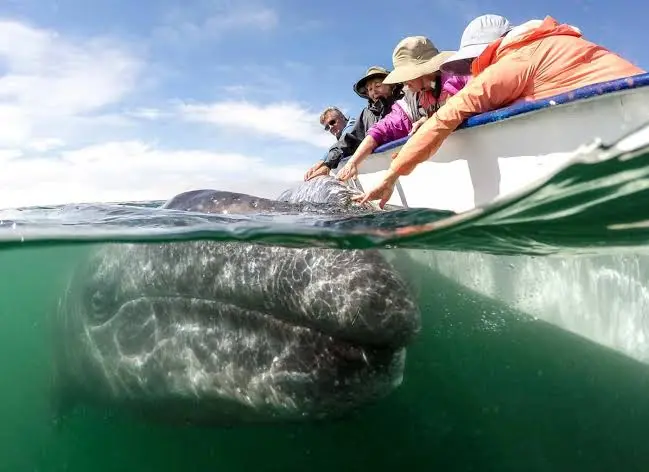
Swimming with the whales is not permitted in any of the three lagoons. Close encounters happen when whales voluntarily approach the boats, often close enough to touch, but guests stay in the boat at all times as part of strict conservation regulations.
When is the best time to see grey whales in Baja California?
Peak season runs from mid-January through March, with February and March generally offering the highest concentration of mothers and calves.
Do grey whales really approach boats on their own?
Yes. Grey whales in these lagoons are known for voluntarily approaching small boats, particularly curious calves investigating engines and passengers. This behavior is well documented across all three lagoons, though it tends to happen most consistently in San Ignacio and Ojo de Liebre.
How far in advance should I book a Baja whale watching trip?
Given permit limits on boat numbers, especially at San Ignacio Lagoon, booking several months ahead of the January to March season is strongly recommended. Check the current season schedule for available dates before planning travel around it.
Once you’re set on a lagoon, the fastest way to lock in dates during peak weeks is to check availability directly rather than waiting, since boat permits are capped and the best weeks fill first.