
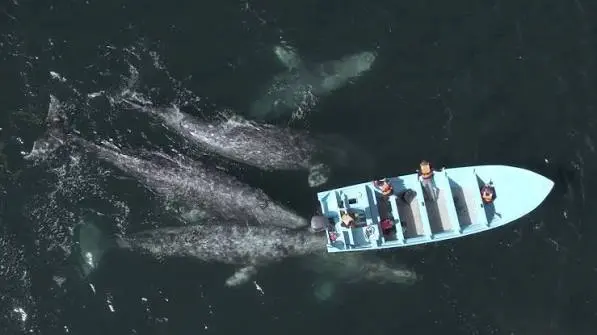
The best time to see gray whales in Baja is December through April during their annual migration. San Ignacio Lagoon and Laguna Ojo de Liebre in Baja California Sur offer the closest encounters with these 50-foot marine mammals. Most visitors book 3 to 4-day guided tours that include small panga boats for intimate whale experiences and wildlife viewing opportunities found nowhere else on Earth.
Why Gray Whales Travel to Baja Every Winter
Every year, over 20,000 gray whales undertake one of nature’s most remarkable journeys. These marine mammals travel approximately 12,000 miles from their Arctic feeding grounds in the Bering Sea to the warm lagoons of Baja California, Mexico. The journey takes roughly 2 months, and by December, the whales begin arriving in Baja’s protected lagoons.
The reason is biological and survival-based. Female gray whales need the calm, warm waters of Baja’s lagoons to give birth and nurse their calves. The lagoons provide natural protection from ocean predators and ideal conditions for newborn whales to develop strength before returning to Arctic feeding grounds in spring.
Gray whale populations have recovered from near extinction, with current estimates showing approximately 14,000 whales in the Eastern Pacific population, thanks to conservation efforts and international protections established in the 1960s.
Best Time to Visit Baja for Whale Watching
| Time Period | What You’ll See | Activity Level | Best For |
| December to January | Incoming migrations, fewer calves | Moderate crowds | Observing long-distance swimmers |
| February to March | Peak arrivals, calves being born, playful behavior | Peak season, popular | Maximum whale interactions and calf viewing |
| April (Early) | Departing whales, less crowded lagoons | Lower crowds | Quieter experience with good sightings |
| May to November | Whales in Arctic feeding grounds | No whale activity | Not recommended for whale watching |
Two Premier Whale Watching Lagoons in Baja California Sur
San Ignacio Lagoon: The Gold Standard
San Ignacio Lagoon is recognized as one of the world’s premier whale watching destinations. Located approximately 140 kilometers south of Santa Rosalia, this UNESCO Biosphere Reserve protects approximately 100,000 hectares of mangrove forests and shallow lagoon waters. Gray whales gather here during breeding season in numbers that can reach 2,000 to 3,000 whales simultaneously.
What makes San Ignacio unique is a behavior called “friendlies.” Gray whales have demonstrated an unprecedented level of curiosity and trust toward humans, approaching tour boats for direct contact. Visitors regularly experience whales swimming alongside small pangas, allowing hand touches and eye-to-eye encounters that wildlife experts consider among the most extraordinary animal interactions available anywhere.
Laguna Ojo de Liebre: The Accessible Alternative
Laguna Ojo de Liebre (Eye of the Hare) sits closer to populated centers than San Ignacio, making it more accessible for travelers with time constraints. Located near the town of Guerrero Negro, this lagoon hosts 3,000 to 4,000 gray whales during peak season. While whale densities differ slightly from San Ignacio, the quality of encounters remains exceptional, and the shorter travel distances appeal to visitors on 2 to 3-day schedules.
Ready to Plan Your Whale Watching Adventure?
Our whale watching tours combine authentic wildlife encounters with expert naturalist guides and comfortable accommodations. Every tour supports local Baja communities and marine conservation efforts. Explore our whale watching tours or contact us for a personalized consultation about the best timing for your visit.
What to Expect on Your Whale Watching Trip
A Typical Day’s Schedule
Most whale watching trips in Baja follow a predictable rhythm designed to maximize encounters while respecting whale behavior and safety regulations:
Early Morning (6:30 AM – 7:00 AM): Guests wake for a light breakfast and briefing from naturalist guides. You’ll receive instructions on wildlife behavior, photography tips, and safety protocols for being in close proximity to 50-foot marine mammals.
Lagoon Time (8:00 AM – 12:00 PM): Small panga boats (20-24 feet, carrying 6-8 passengers) depart for the lagoon. Boats cruise slowly, allowing wildlife observation. Whales typically approach boats, or guides position vessels to facilitate encounters. Most travelers photograph or video record whales from distances of 10 to 20 feet.
Lunch Break (12:00 PM – 1:30 PM): Return to shore for a large meal. Local cuisine features fresh fish, seafood, and traditional Baja dishes prepared by camp staff.
Afternoon Session (2:00 PM – 5:00 PM): Second lagoon outing provides additional whale viewing opportunities. Afternoon light conditions often produce superior photography.
Evening (6:00 PM onward): Dinner, wildlife briefings, and evening relaxation. Many camps offer presentations about gray whale biology, migration patterns, and conservation efforts.
Physical Requirements and Considerations
Whale watching requires moderate physical fitness. Guests must:
- Board and exit small panga boats multiple times daily (boats lack stairs; entry requires stepping down 2 to 3 feet)
- Sit on bench seats in open boats for 3 to 4 hours at a time
- Tolerate cool morning temperatures (55 to 65 degrees Fahrenheit) and afternoon sun exposure
- Be comfortable with ocean swells and boat motion in relatively calm but not entirely still conditions
The experience is accessible to most adults and older children (typically age 8 and up), but expectant mothers, individuals with recent surgeries, or those with severe mobility restrictions should consult trip coordinators before booking.
Frequently Asked Questions About Baja Whale Watching
How close do you get to the whales?
Distance varies by whale behavior. Friendly whales often approach boats to 10 to 15 feet away, allowing direct observation and photography. Guides never chase or approach resting whales aggressively. Typical average distance is 20 to 50 feet, with closer encounters occurring 40 to 60 percent of observation time during peak season.
What percentage of visitors see whales?
During peak season (February through March), whale sighting rates exceed 95 percent. Even in early December and late April, sighting rates remain above 85 percent. Gray whales congregate in relatively small lagoon areas during breeding season, virtually guaranteeing observations for visitors during optimal times.
Is whale watching safe?
Yes. Despite their massive size, gray whales are generally docile during breeding season. Commercial whale watching operations have operated safely in Baja lagoons for over 40 years. Guides follow strict protocols: no chasing, limited boat speeds, and immediate withdrawal if whales show stress signals. Serious incidents are extremely rare.
Do I need passport or visa requirements?
Yes. US citizens need a valid passport for travel to Mexico. Canada, Australia, UK, and most other nations can enter Mexico with a passport valid for 6 months. Mexico does not currently require visas for tourists from these countries, but entry requirements change. Verify current requirements with your country’s foreign affairs department before booking.
What should I pack for a whale watching trip?
Essential items include: layered clothing (mornings are cool), sunscreen (SPF 50+), waterproof camera, binoculars, motion sickness medication if prone to seasickness, prescription medications, and a light rain jacket. Avoid perfume or strongly scented products as whales are sensitive to smells. Most camps provide meals, bedding, and towels.
Conservation and Ethical Whale Watching
Responsible whale watching operators in Baja work within strict international guidelines designed to protect gray whales while allowing sustainable tourism. These regulations include:
- Maximum of 5 boats per whale group at any time
- Speed restrictions in lagoon waters (no more than 5 knots when whales are present)
- Mandatory distance minimums from resting or nursing whales
- Seasonal permits issued by Mexican environmental authorities
- Local guide requirements ensuring expertise in whale behavior and safety
Gray Whale Camp operates under these protection standards, with guides trained in marine biology and committed to conservation. A portion of tour revenue supports local Baja communities and marine research initiatives studying gray whale populations and lagoon ecosystem health.
Book Your Whale Watching Adventure Today
Limited tour slots fill quickly during peak season. Secure your spot for a lifetime experience watching one of Earth’s most remarkable marine migrations. Call for availability or submit an inquiry form to discuss dates, group sizes, and accommodation preferences. Most bookings require 4 to 6 weeks advance notice for peak season dates.
Planning Your Baja Whale Watching Getaway
Best Length of Stay
Most visitors opt for 3 to 4-day packages including travel days. A typical itinerary includes Friday arrival in Mexico, full-day Saturday whale watching, full-day Sunday whale watching, and Monday morning departure. This schedule minimizes time away from work or home while maximizing lagoon time. Alternatively, dedicated wildlife enthusiasts book 5 to 7-day extended packages combining whale watching with bird watching, sea lion colonies, or desert hiking in Baja Sur.
Travel Logistics
Most international travelers fly into Cabo San Lucas (Los Cabos International Airport), San Jose del Cabo, or La Paz (Manuel Marquez de Leon International Airport). From there, ground transportation to whale watching camps typically requires 5 to 7 hours of driving. Alternatively, charter flights from Cabo to field strips near camps take 1 to 2 hours but add expense.
Cost Considerations
Whale watching tours in Baja range from $1,500 to $4,500 USD per person for 3 to 4-day packages, depending on accommodation comfort level, group size, and included amenities. Costs typically include ground transportation from major towns, meals, lagoon tours, naturalist guiding, and accommodations. Travelers should budget separately for flights, travel insurance, and any pre-trip preparations.
Why Choose Baja for Whale Watching Over Other Destinations
While whale watching occurs in many global locations, Baja’s lagoons offer distinct advantages:
- Unmatched Proximity: Whales approach boats in calm lagoon waters, not open ocean. This creates photography and observation opportunities unavailable elsewhere.
- Breeding Season Behavior: Observing mothers, calves, and social whales provides natural history insights impossible to see at Arctic feeding grounds.
- Extended Presence: Whales remain in Baja lagoons for 3 to 4 months, offering consistent seasonal opportunities versus brief migration windows in other destinations.
- Expert Local Guides: Baja’s whale watching industry employs naturalists with decades of experience reading whale behavior and positioning boats for optimal encounters.
- Supporting Local Communities: Tourism revenues directly benefit small Baja fishing villages and fund marine research specific to gray whale conservation.
The Bottom Line: Is Baja Whale Watching Worth the Investment?
Yes. Gray whale watching in Baja California Sur represents a once-in-a-lifetime wildlife experience. Encountering a 50-foot whale at close range, observing mother-calf bonding, and witnessing the biological commitment these creatures make to traverse 12,000 miles annually creates transformative memories and deeper appreciation for ocean conservation.
Most returning visitors report that whale watching exceeded expectations and ranks among their most meaningful travel experiences. The combination of authentic wildlife encounters, pristine Baja wilderness, and knowledgeable guiding creates an immersive natural history experience that casual tourism cannot replicate.
Ready to Experience Gray Whale Watching in Baja?
Start planning your adventure today. Reach out for consultation on optimal travel dates, group arrangements, and customized itineraries. Peak season books 6 to 8 weeks in advance, so secure your spot early. Your whale watching journey awaits.
About Gray Whale Camp
Since 1995, Gray Whale Camp has operated authentic whale watching expeditions in Baja California Sur. Our naturalist guides, local partnerships, and commitment to marine conservation have introduced over 15,000 visitors to gray whales in their natural breeding habitat. We maintain strict environmental standards and support ongoing research into gray whale migration patterns and lagoon ecosystem health.