
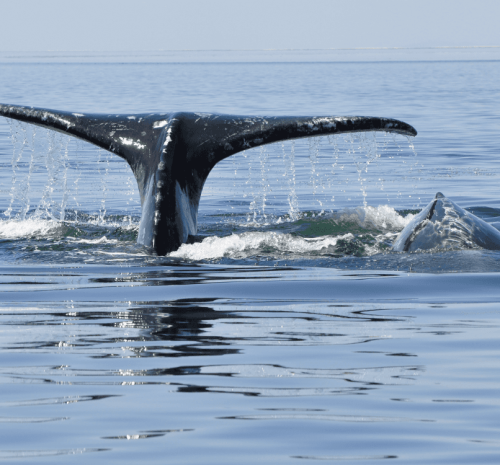
Whale watching in Loreto is best known for blue whales, the largest animals ever to live, which often feed in and around Loreto Bay National Park in late winter. Tours watch them at a respectful distance. Gray Whale Camp offers gray whale and blue whale combination itineraries, pairing gray whale watching at our base on Laguna Ojo de Liebre with blue whale watching. The current published itinerary is on our Schedule page.
Why Loreto Stands Out
Loreto is a small town founded in 1697 as the first Spanish mission settlement in the Californias. Offshore lies Loreto Bay National Park, created in 1996, which includes several islands such as Isla del Carmen and Isla Coronado. The islands and protected areas of the Gulf of California are also part of a UNESCO World Heritage Site.
For more information about the area’s marine wildlife and excursions, explore our whale watching in Loreto and the Sea of Cortez guide.
Whales You May See in the Loreto Area
This is general information about the region. Sightings vary by season and conditions and are never guaranteed.
Species | Where | Encounter style |
Blue whale | Loreto Bay and nearby Sea of Cortez | Viewed at a respectful distance |
Fin whale | Sea of Cortez | Usually at a distance |
Humpback whale | Sea of Cortez | Usually at a distance |
Dolphins | Loreto Bay | Sometimes ride alongside boats |
Gray whales do not usually gather near Loreto. They breed in the Pacific lagoons on the other side of the peninsula.
Blue Whales vs Gray Whales: What Is the Difference?
Blue whales can exceed 25 meters and feed on krill in open water, so tours watch them surface, blow and dive from a distance. Gray whales are smaller, around 14 meters, and in the Pacific lagoons some approach boats on their own. Seeing both gives you a sense of the full scale of Baja’s whale life.
Gray Whale Camp’s Gray and Blue Whale Combination
Gray Whale Camp offers gray whale and blue whale combination itineraries. The gray whale portion takes place at Laguna Ojo de Liebre, where our schedule generally includes two boat trips of 2 to 3 hours per whale-watching day, weather permitting. For the full itinerary, including dates, duration, transportation and inclusions, see the published gray and blue whale combination itinerary.
To learn how Ojo de Liebre compares with Baja’s other gray whale lagoons, read our Baja whale watching lagoons comparison.
General Tips for Whale Watching in Loreto, Baja California
- Choose blue whale tours with operators licensed for the national park
- Mornings are often calmer; wind can build later in the day
- National park fees may apply to bay and island trips
- Leave buffer time around flights in case of delays
Loreto in the Bigger Picture
Loreto is one of several whale destinations in Mexico, alongside Los Cabos, Puerto Vallarta and the Baja lagoons. See how they compare in our whale watching in Mexico guide.
Plan Your Gray and Blue Whale Trip
Want gray whales and blue whales in one trip? See Gray Whale Camp’s published combination itinerary on our Schedule page.
Frequently Asked Questions
Not usually near town. Gray whales gather in the Pacific lagoons on the other side of the peninsula.
Blue whales are most often seen in late winter. Exact timing varies by year.
Yes, as part of our gray whale and blue whale combination itineraries. See our Schedule page for the current itinerary.
At Laguna Ojo de Liebre, where Gray Whale Camp is based.
No. Whales are wild, and sightings depend on season and conditions.