Baja California Sur has three main gray whale breeding lagoons. Laguna Ojo de Liebre usually hosts the largest number of gray whales and is close to Highway 1. Laguna San Ignacio is remote and is where friendly whale encounters were first recorded. Magdalena Bay is the southernmost system, closer to Loreto and La Paz. This guide is educational. Gray Whale Camp operates at Laguna Ojo de Liebre only.
The Three Lagoons Side by Side
Factor | Laguna Ojo de Liebre | Laguna San Ignacio | Magdalena Bay |
Location | Near Guerrero Negro, northern Baja California Sur | Central Pacific coast, Baja California Sur | Southern Pacific coast, west of Loreto |
Protected status | El Vizcaíno Biosphere Reserve, UNESCO World Heritage | El Vizcaíno Biosphere Reserve, UNESCO World Heritage | Regulated whale watching zones, outside the reserve |
Whale numbers | Usually the highest | High | Moderate, spread through channels |
Access | Close to Highway 1 | Remote, long road from San Ignacio town | Nearer the Loreto and La Paz side of the peninsula |
Gray Whale Camp | Yes, our base | No | No |
Laguna Ojo de Liebre: The Largest Gathering
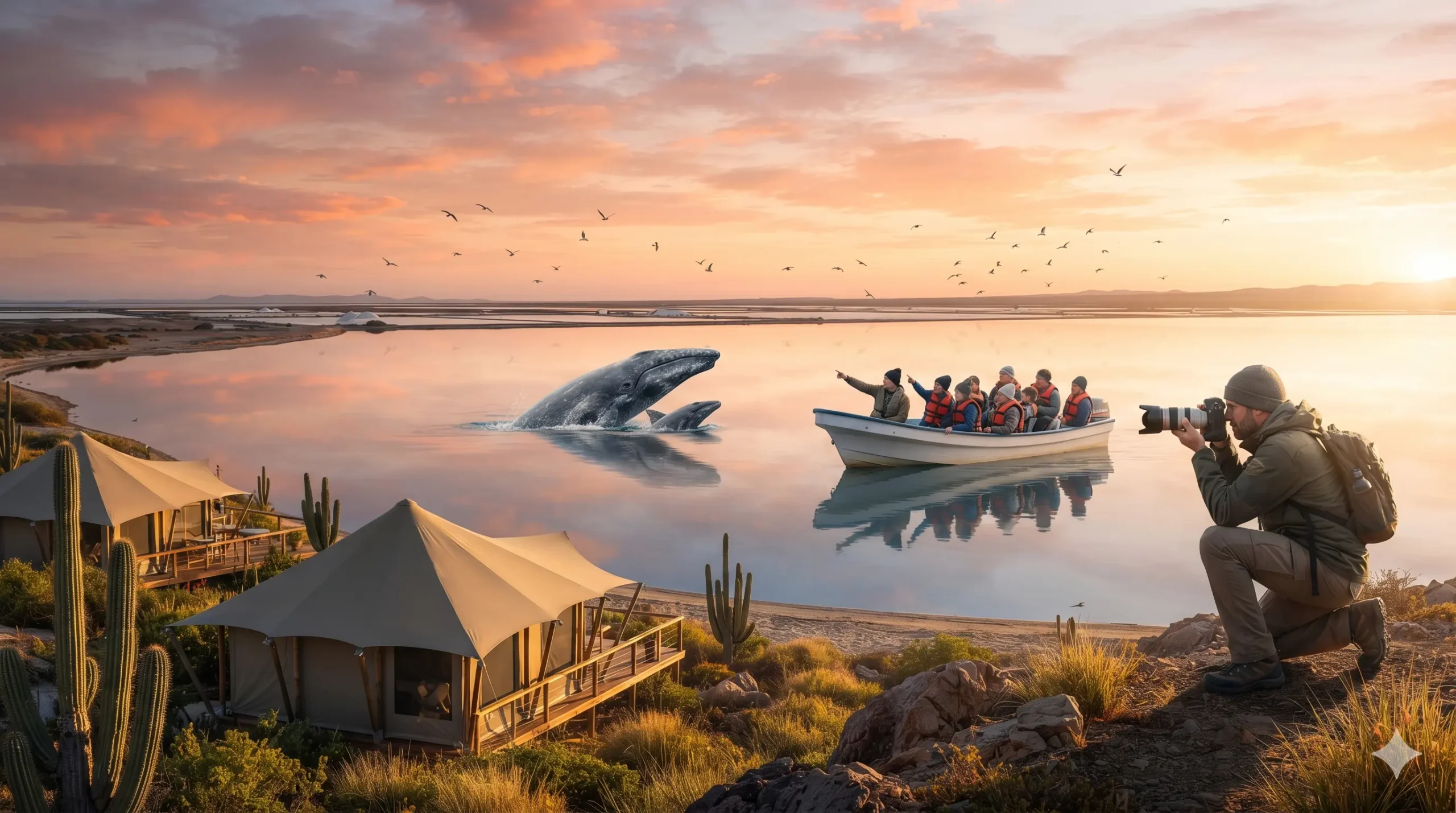
Also known as Scammon’s Lagoon, Ojo de Liebre typically hosts the largest concentration of gray whales in Baja. It sits near the town of Guerrero Negro and Highway 1. This is where Gray Whale Camp is based. Our schedule generally includes two boat trips of 2 to 3 hours per whale-watching day, weather permitting. See our Schedule page for current trip dates.
To understand what visitors can expect at our lagoon-based camp, explore the Gray Whale Camp experience.
Laguna San Ignacio: Where the Story Began
In 1972, a gray whale in San Ignacio approached a fisherman’s panga and let him touch it, the first recorded friendly encounter. The lagoon is remote. In 2000, a planned large industrial salt works on the lagoon was cancelled after an international campaign. Gray Whale Camp does not operate at San Ignacio.
Magdalena Bay: A Lagoon System of Channels
Magdalena Bay is a long system of barrier islands, channels and mangroves. Whales gather near Puerto Adolfo López Mateos and Puerto San Carlos. Gray Whale Camp does not operate at Magdalena Bay.
What the Three Lagoons Have in Common
- The same general season, roughly mid-January to mid-April
- Licensed pangas and regulated whale watching zones under NOM-131-SEMARNAT-2010
- Mothers and calves often most present in late February and March
- Wind as the most common cause of changed boat trips
- Whale encounters that depend on the whales and conditions, never guaranteed
Comparing other regions too? See how the lagoons compare with humpback and blue whale spots in our whale watching in Mexico guide. For season timing and safety basics, start with the complete Baja whale watching guide.
Visiting Laguna Ojo de Liebre With Us
If Ojo de Liebre suits your plans, see our Schedule page for trip dates, inclusions and transportation options.
Frequently Asked Questions
Laguna Ojo de Liebre usually hosts the largest number.
Laguna San Ignacio is where friendly encounters were first recorded, though they have since been reported in all three lagoons.
Laguna Ojo de Liebre only.
Ojo de Liebre and San Ignacio are within the El Vizcaíno Biosphere Reserve and the Whale Sanctuary of El Vizcaíno, a UNESCO World Heritage Site. All three lagoons have regulated whale watching zones.
No. Encounters depend on the whales' behavior and conditions.