
Every gray whale camp in Baja California will tell you the whales come close. That claim alone tells you almost nothing, since it is true at most reputable lagoon operations during peak season. The real differences that separate a great trip from an average one are location within the lagoon system, trip length, group size, guide experience, and what happens on the boat during the hours you are not actively with whales. Here is what to actually compare.
If you are choosing between operators for a gray whale watching camp in Baja California, this is the checklist to work through before you book, not after.
What to Compare Before Booking a Gray Whale Camp
| Factor | Why it matters | What to ask |
| Lagoon location | Gray whales concentrate in three main lagoons (Laguna San Ignacio, Laguna Ojo de Liebre, Magdalena Bay), and encounter rates vary by lagoon and by year | Which specific lagoon does this trip use, and why |
| Trip length | A single day trip gives you one outing; a multi-day camp gives you several outings across several days, which matters because whale activity varies day to day | How many boat outings are actually included |
| Group size per boat | Smaller groups per boat generally mean more time and better positioning per person | How many guests per boat, and how many boats per trip |
| Guide experience | Experienced local guides read whale behavior and position boats for natural, unforced encounters rather than chasing whales | How long has this guide team operated in this specific lagoon |
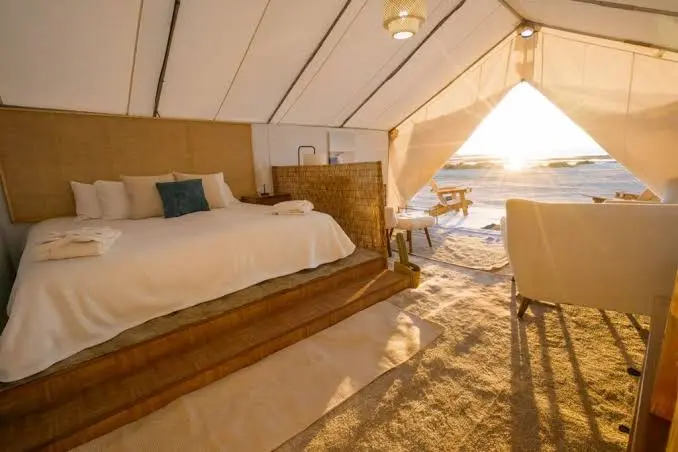
| Accommodation type | Tents, cabins, and liveaboard boats all offer very different comfort levels for a multi-day stay | What is the actual sleeping and bathroom setup, not just marketing photos |
| Single-traveler policy | Solo travelers can face steep single supplements at some operators | Is there a single supplement, and how much |
Why “Close Encounters” Alone Is Not Enough Information
Almost every operator in the gray whale lagoons will describe close encounters, because gray whale mothers and calves in these specific lagoons are genuinely known for approaching boats voluntarily, unlike almost anywhere else gray whales are seen. That is a real feature of the lagoons themselves, not a unique claim any one operator can take full credit for. What actually varies between operators is how many outings you get to be in position for that to happen, how experienced the boat drivers are at positioning respectfully, and how the operation follows the boat-approach guidelines set for the protected biosphere reserve. A guide team with two decades of daily experience in one lagoon, like the team behind this camp, reads whale behavior differently than a seasonal operator running its first few seasons.
Whale Watching in Loreto vs. a Gray Whale Lagoon Camp: Two Different Trips
These often get searched together, but they are genuinely different products, and knowing which one you actually want avoids a mismatched trip.
| Gray Whale Lagoon Camp | Whale Watching Loreto | |
| Location | Pacific-side lagoons (Laguna Ojo de Liebre and similar) | Sea of Cortez, near Loreto |
| Primary species | Gray whales (mothers and calves) | Blue whales, fin whales, and other Sea of Cortez species, often combined with gray whale days |
| Trip style | Stationary camp, multiple boat outings from one base | Often a longer combination expedition covering two ecosystems |
| Best for | Travelers who want to focus specifically on gray whale mother-calf encounters | Travelers who want broader species diversity across two coastlines in one trip |
If your main goal is gray whale encounters specifically, book the lagoon camp. If you want gray whales plus blue whales and Sea of Cortez marine life in the same trip, the Loreto-based combination expedition is built for that instead.
Questions to Ask Any Gray Whale Camp Before You Book
- How many boat outings are included, and how long is each one?
- What is the maximum group size per boat?
- How many years has this specific team operated in this specific lagoon?
- What does the accommodation actually include (beds, bathrooms, heating, meals)?
- Is there a single-traveler supplement?
- What happens if weather cancels an outing during your stay?
Red Flags When Comparing Gray Whale Watching Operators
- Marketing photos and language that could describe any lagoon operator, with no specifics about their own boats, guides, or camp.
- No clear answer on how many outings are actually included in a multi-day package.
- No mention of following the biosphere reserve’s boat-approach guidelines, which exist specifically to protect calving whales from harassment.
- Pricing that does not clarify what is included versus what costs extra once you arrive.
Why Timing Matters More for the 2027 Season
Gray whale camps run on a strict seasonal window, roughly December through April, with late February through mid-March generally offering the strongest numbers of mothers and calves. Because camps operate with a fixed number of tents or cabins and a fixed number of boats, the best dates within that window sell out well before the season starts, not during it. Booking early for 2027 is less about urgency marketing and more a practical reality of limited beds and limited boat capacity during a short annual season.
FAQs
What makes one gray whale camp better than another if they’re all in similar lagoons?
The lagoon location narrows the options, but trip length, group size per boat, guide experience, and accommodation quality are what actually separate operators within the same general area.
Is whale watching in Loreto the same as a gray whale camp trip?
No. Loreto-based trips are centered on the Sea of Cortez and typically feature blue whales, fin whales, and other species, sometimes combined with gray whale lagoon days as part of a longer expedition. A dedicated gray whale camp is a stationary, multi-day stay directly at a Pacific-side lagoon.
How many boat outings should a good gray whale camp include?
Look for multiple outings across your stay rather than a single trip, since whale activity and encounter quality vary day to day, and more outings meaningfully increase your odds of an exceptional encounter.
Do I need previous boating or wildlife experience to go on a gray whale camp trip?
No. These trips are designed for general travelers, with experienced guides handling boat positioning and safety.
Is it worth paying more for a smaller group size per boat?
Generally yes, since a smaller group per boat means more time in position near whales for each guest, rather than a large group cycling through limited viewing space.
When should I book for the 2027 gray whale season?
As early as possible. Camps operate with fixed accommodation and boat capacity across a short seasonal window, and the strongest weeks (typically late February through mid-March) are the first to fill.
Ready to Compare for Yourself?
The questions above will tell you more about any gray whale camp than a photo of a whale next to a boat ever will. If you want to see how a camp with over two decades of experience in the same lagoon answers them, check current 2027 season dates and availability before the strongest weeks are gone.