
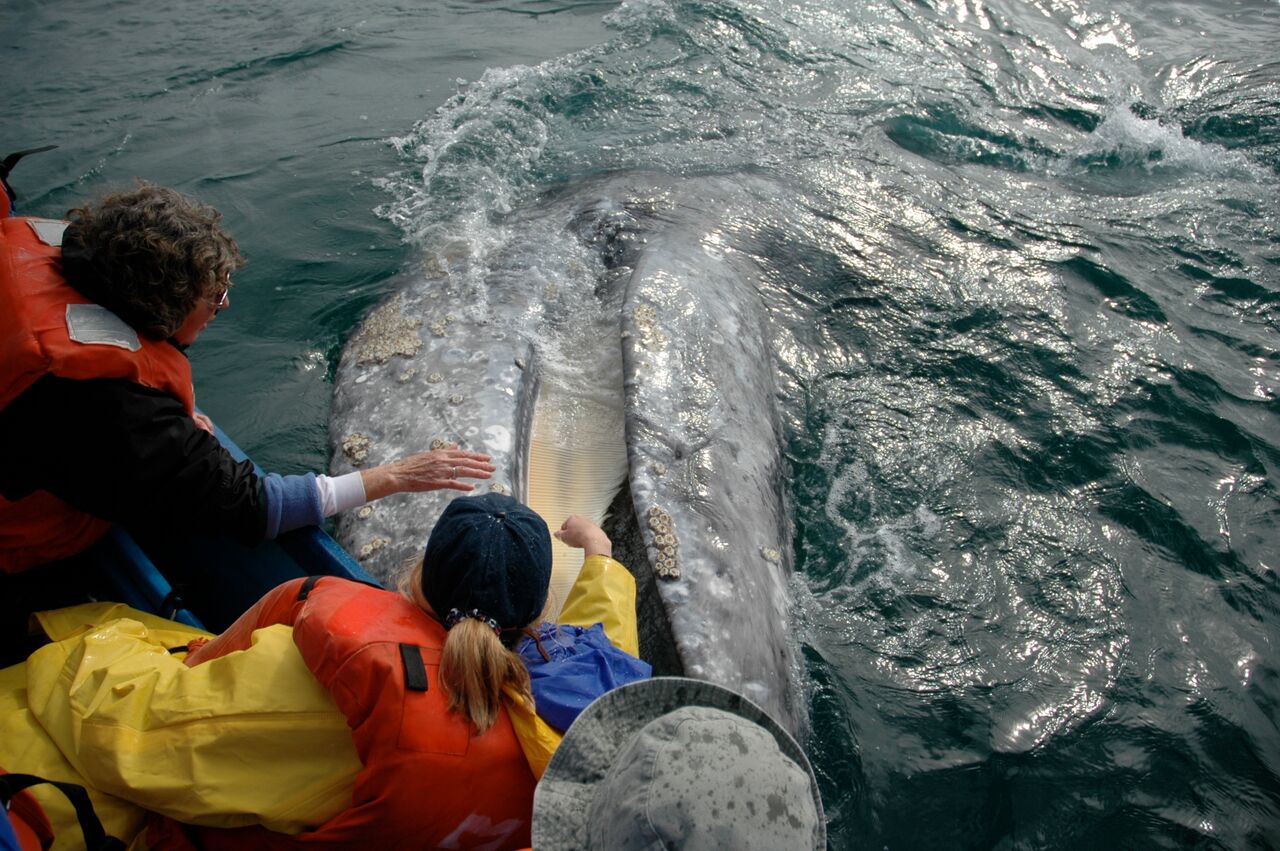
The answer up front: For the chance of close, voluntary approaches, Baja’s gray whale lagoons are Mexico’s standout, usually from February to March. For humpback breaches, Los Cabos and Puerto Vallarta are popular in winter. For blue whales, the largest animals on Earth, Loreto on the Sea of Cortez is a well-known destination in late winter. Gray Whale Camp is based at Laguna Ojo de Liebre, so we are biased toward the lagoons, but this guide covers each option fairly.
Mexico Whale Watching at a Glance
This is general destination information, not a list of Gray Whale Camp services.
Destination | Main species | General season | Encounter style |
Baja Pacific lagoons (Ojo de Liebre, San Ignacio, Magdalena Bay) | Gray whale | About mid-January to mid-April | Whales sometimes approach boats closely |
Loreto, Sea of Cortez | Blue whale, fin whale, humpback | Late winter into spring | Viewed at a respectful distance |
Los Cabos | Humpback, some gray whales | Winter | Open ocean, usually at a distance |
Puerto Vallarta, Banderas Bay | Humpback | Winter | Usually at a distance |
La Paz | Whale shark (a fish) | Varies by season | Regulated swim tours |
Why Mexico Is a Whale Watching Hotspot
Mexico’s Pacific coast and the Sea of Cortez are winter breeding and feeding grounds for several great whale species. Mexico protects key areas, including the El Vizcaíno Biosphere Reserve and Loreto Bay National Park, and regulates whale watching boats through the federal standard NOM-131-SEMARNAT-2010.
Baja’s Gray Whale Lagoons
Gray whales give birth inside shallow, protected lagoons, and some mothers and calves approach small boats on their own. That behavior is very rare elsewhere in the world. Gray Whale Camp operates at Laguna Ojo de Liebre, where our schedule generally includes two boat trips of 2 to 3 hours per whale-watching day, weather permitting. To understand how the three lagoons differ, see our Baja lagoons comparison.
Loreto: Blue Whales in the Sea of Cortez
In late winter, blue whales often feed in and around Loreto Bay National Park. Tours watch them at a respectful distance. Gray Whale Camp offers gray whale and blue whale combination itineraries; see the published itinerary on our Schedule page for details. Read our full guide to whale watching in Loreto.
Los Cabos and Puerto Vallarta: Humpback Country
Humpbacks are known for breaching, tail-slapping and song. Tours usually leave from busy marinas and are easy to combine with a resort stay. Encounters are generally more distant, and open ocean conditions can be choppy.
La Paz: A Different Kind of Giant
Whale sharks are the world’s largest fish, not whales. Swims with them are tightly regulated, and seasons vary.
How to Choose
- You hope for a close gray whale approach: Baja’s gray whale lagoons
- You want humpback breaches near a resort: Los Cabos or Puerto Vallarta
- You want to see the largest animal on the planet: Loreto
- You want gray whales and blue whales in one trip: see Gray Whale Camp’s gray and blue whale combination itinerary
Plan Your Mexico Whale Trip
If gray whales are at the top of your list, see our Schedule page for current trip dates and the gray and blue whale combination itinerary.
Frequently Asked Questions
It depends on the species. For the chance of close gray whale approaches, Baja's lagoons. For humpbacks, Los Cabos or Puerto Vallarta.
Most whale watching runs through the winter months. Gray whales are generally in the Baja lagoons from about mid-January to mid-April.
Gray whales in the Baja lagoons sometimes approach boats closely enough to touch. You never initiate contact, and it is never guaranteed.
It can be. Choose licensed operators who follow the federal rules on distance, speed and time.
Gray Whale Camp offers gray whale and blue whale combination itineraries. See our Schedule page for the current published itinerary.