
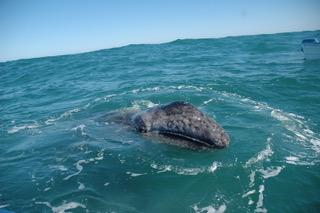
Across Baja’s lagoons, mid-February to late March is often one of the strongest windows for gray whale watching. Whale numbers are usually high, mothers and calves are present, and friendly approaches may be more frequent. January tends to bring more courtship activity among adults. Season patterns vary from year to year, and Gray Whale Camp’s own trip dates are listed separately on our Schedule page.
The Wider Baja Season at a Glance
The table below describes general seasonal patterns across Baja’s gray whale lagoons. It is not Gray Whale Camp’s operating schedule.
Period | Whale numbers | What visitors often see |
Late December | Low | First pregnant females arriving |
January | Rising | Courtship, breaching, first newborns |
February | High | Newborn calves and resting mothers |
March | Often highest for mother and calf pairs | Curious calves, frequent approaches |
Early April | Falling | Older calves, last mothers preparing to leave |
Mid-April onward | Very low | Lagoons emptying as whales head north |
Why the Timing Changes Everything
Gray whales do not arrive in Baja’s lagoons all at once.
Pregnant females often lead the southbound migration, followed by other adults and juveniles. On the northbound journey, whales without calves generally begin leaving earlier, while mothers often remain longer so their calves can gain strength before the migration north.
That seasonal pattern is one reason later trips can be especially rewarding.
By March, many calves are several weeks old and may be more curious around boats. Mothers may also appear more relaxed around pangas.
However, whale behavior varies daily, and close encounters are never guaranteed.
January: Courtship and Surface Activity
January can be an exciting time for Baja Gray Whale Watching because more adult whales are arriving and courtship activity may be visible.
Visitors may see:
- Breaching
- Spy-hopping
- Rolling at the surface
- Groups of courting adults
- The first newborn calves of the season
Close approaches can occur in January, but they are generally considered less predictable than later in the season when more mothers and calves are present.
For travelers interested in active surface behavior rather than focusing mainly on mother-and-calf encounters, January can be an appealing choice.
February: A Balanced Choice
By mid-February, whale numbers are often high across Baja’s lagoons and newborn calves are usually present in greater numbers.
This makes February a popular choice for first-time visitors because it can offer a balance between:
- Strong overall whale numbers
- Mothers with young calves
- Adult whale activity
- Good photography opportunities
- Potential close approaches
Conditions and behavior still vary from day to day, but February is often considered one of the most reliable periods within the wider gray whale season.
March: Mother and Calf Season
March is often one of the most rewarding periods for gray whale watching in Baja, particularly for travelers hoping to see mothers and calves.
By this stage of the season, calves are older and may be more active and curious around boats.
Visitors may observe:
- Mother-and-calf pairs
- Calves practicing surfacing and swimming
- Spy-hopping
- Breaching
- Curious approaches to pangas
If close encounters are your main priority, March is often one of the strongest months across the region, depending on weather, whale numbers and individual whale behavior.
For Gray Whale Camp’s actual operating dates, always refer to our Schedule page rather than assuming the broader regional season matches our departures.
Early April: The Tail End of the Wider Baja Season
Across the region, some gray whales may still be present in the lagoons during early April.
Whale numbers generally begin to fall as more animals start their northbound migration. Mothers with calves are often among the last whales to leave because calves need additional time to build strength before the long journey north.
Visitors traveling elsewhere in Baja during early April may still encounter:
- Older calves
- Mothers preparing to migrate
- Lower overall whale numbers
- Quieter lagoon conditions
This is general Baja season information only.
Gray Whale Camp’s current operating dates should always be confirmed on our Schedule page, as our published trip schedule may end before the wider regional whale season does.
Weather and Wind
Weather can have just as much impact on a whale-watching trip as the month you choose.
Wind is one of the main reasons lagoon boat trips may be delayed, adjusted or rescheduled.
Mornings on the water can also feel much colder than temperatures on land suggest, especially with wind and spray.
Pack:
- Warm layers
- A windproof jacket
- A water-resistant outer layer
- A beanie or warm hat
- Sunglasses
- Shoes that can get wet
For a more complete packing and travel guide, read our whale watching trip planning guide.
A Note on Recent Seasons
Gray whale abundance is not identical every year.
NOAA Fisheries monitoring has documented substantial changes in the eastern North Pacific gray whale population in recent years, including periods of reduced abundance and low calf production.
Because of these natural population changes, the exact number of whales present in Baja’s lagoons can vary significantly from one season to another.
That is why it is best to plan your trip with realistic expectations and some flexibility rather than assuming one month will always produce the same experience.
How to Pick Your Dates
Use this simple process when choosing the timing of your Whale Watching Trip to Baja:
- Decide what matters most to you: close encounters, active surface behavior, mother-and-calf sightings or photography.
- Compare your priorities with the general seasonal patterns above.
- Check Gray Whale Camp’s Schedule page for the actual trip dates we currently offer.
- Choose from those published dates if you are traveling with Gray Whale Camp.
- Book early if you want one of the most popular peak-season departures.
If you are completely new to the region, start with our complete guide to whale watching in Baja for an overview of the lagoons, season, travel considerations and what to expect.
To understand the whales’ seasonal movements in more detail, explore our Baja gray whale watching guide.
Frequently Asked Questions
Across the Baja lagoons, late February through March is often one of the strongest periods for mother-and-calf activity. Actual whale numbers and behavior vary from year to year.
Yes, a small number of early arrivals may reach the Baja lagoons in late December. However, whale numbers are usually much lower than they are later in January, February and March.
Gray Whale Camp's current trip dates are listed on our Schedule page. Our operating schedule should not be assumed to match the full regional Baja whale season.
Do not use the wider Baja season as an indication of Gray Whale Camp's operating dates. Some whales may still be present elsewhere in the region during early April, but Gray Whale Camp guests should rely only on the published dates shown on our Schedule page.
Across the region, gray whales are generally present in the lagoons from approximately mid-January through early or mid-April, with some early arrivals appearing in late December. The exact timing varies each year.
Both can be excellent.
February often provides a strong balance of overall whale numbers, newborn calves and adult activity. March is often particularly popular for travelers hoping to see mother-and-calf pairs and curious older calves.
No. Gray whales are wild animals, and sightings, approaches and interactions can never be guaranteed. Weather, wind and individual whale behavior also affect each trip.
Mothers often remain in Baja's protected lagoons longer so their calves can grow stronger before beginning the long northbound migration. This is one reason mother-and-calf pairs may still be present after many adult whales have already started heading north.